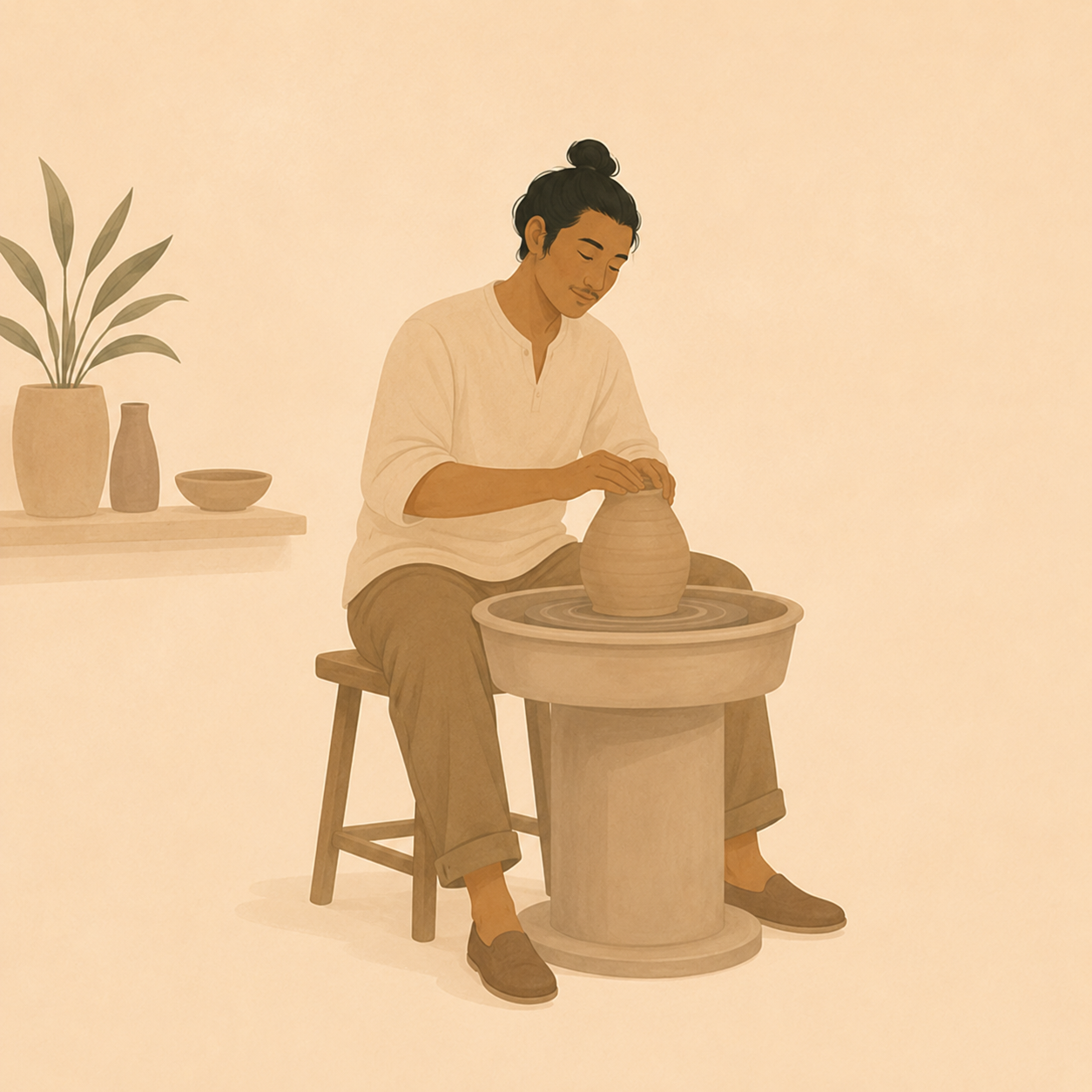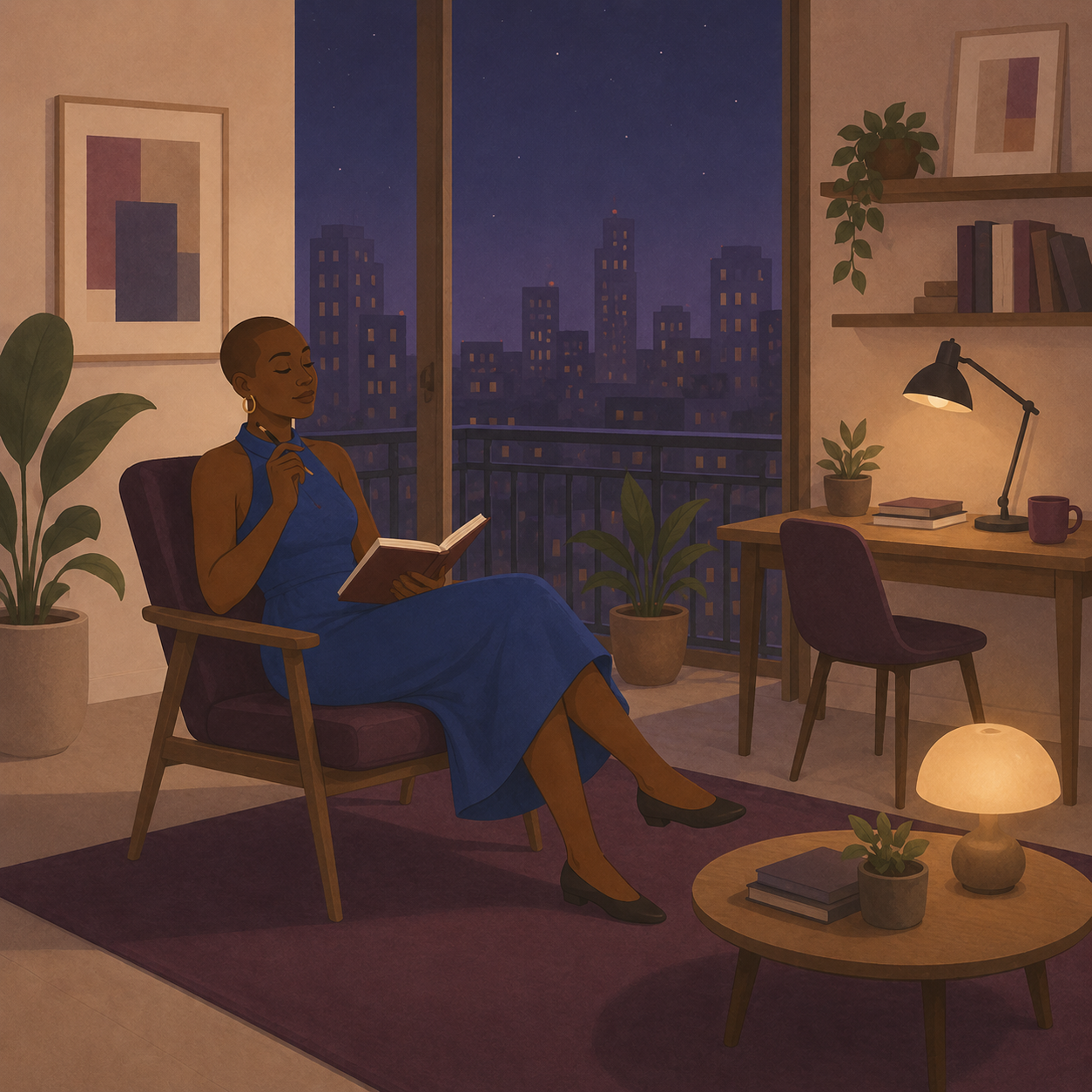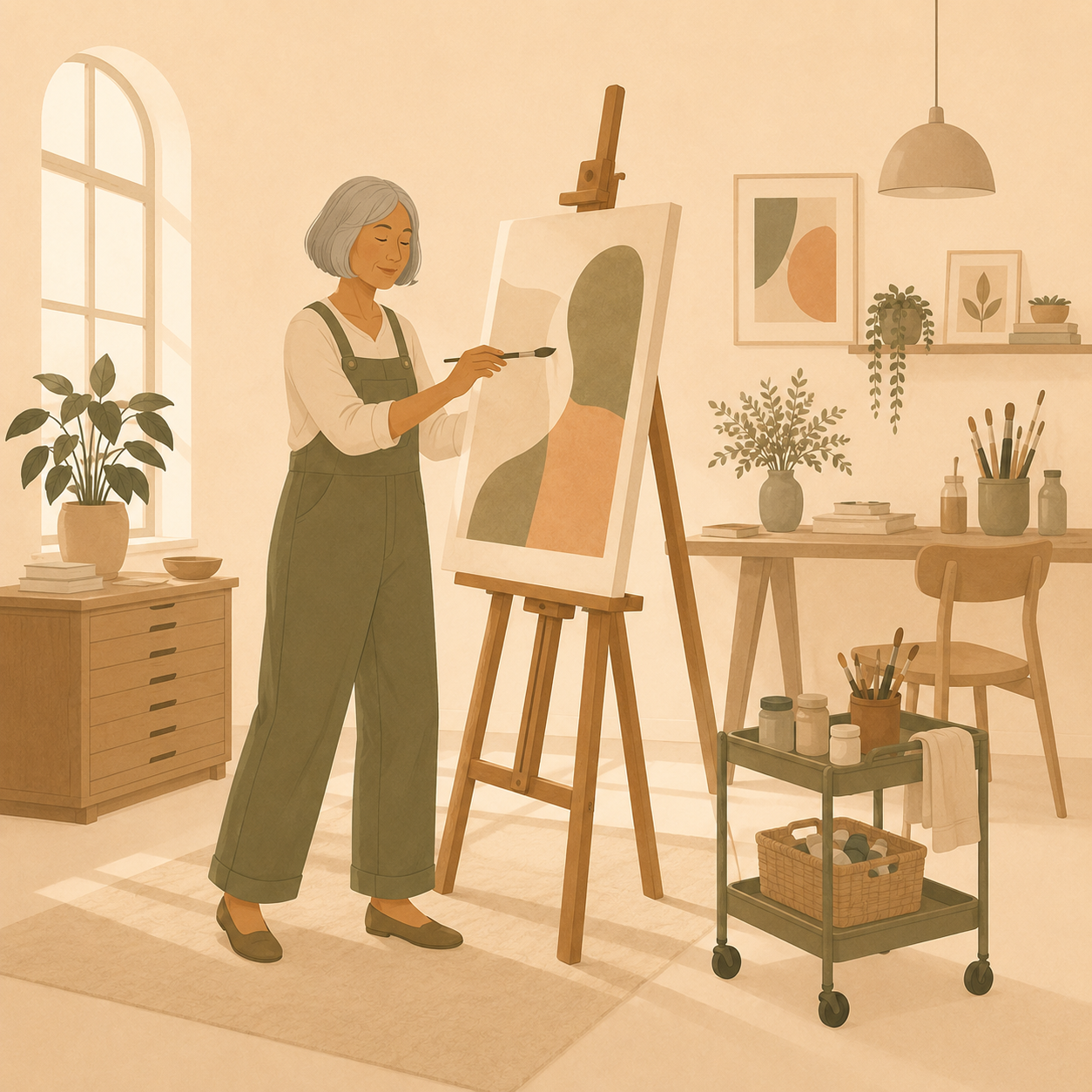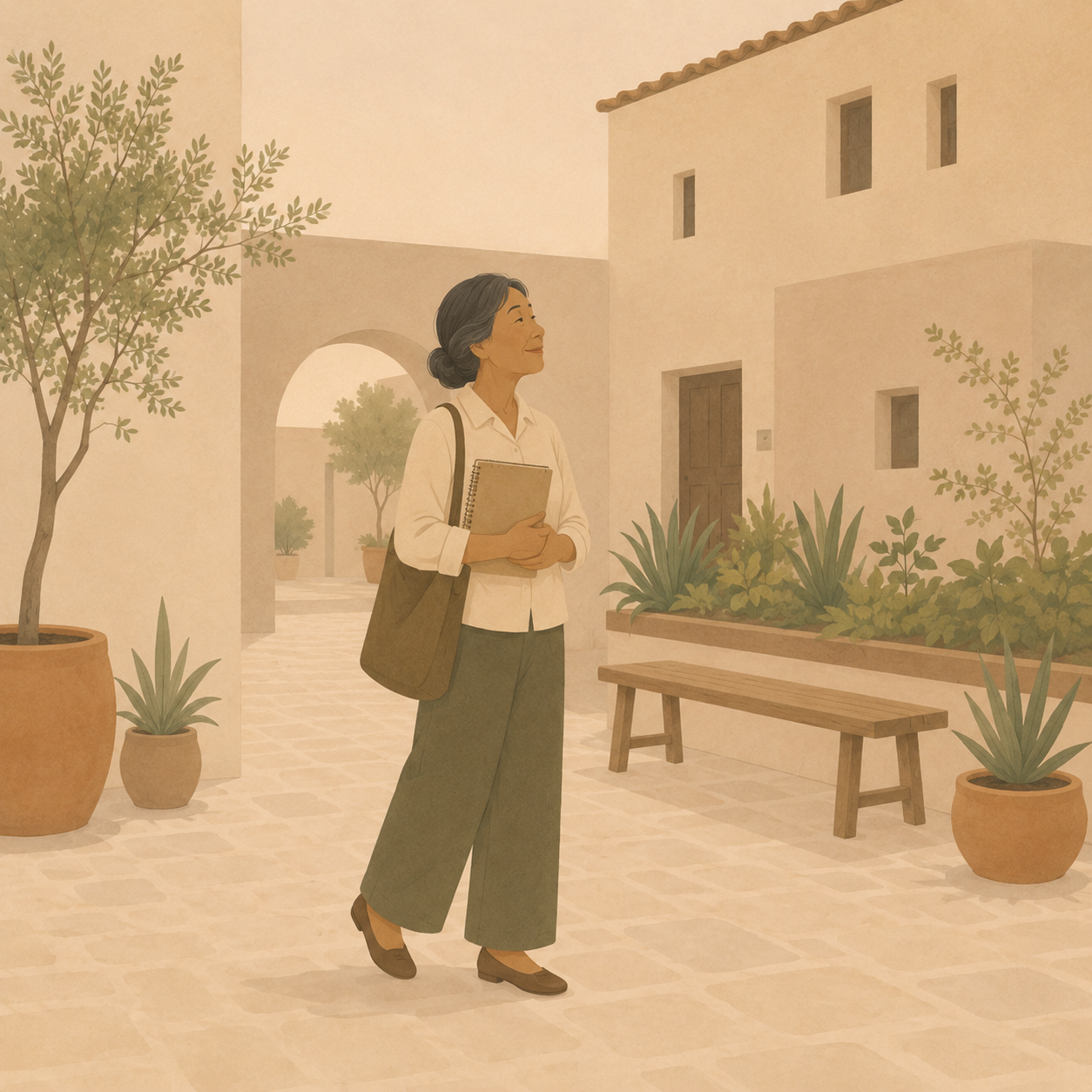
You went out for bread. There was a direct route to the bakery, six minutes if the lights favoured you. Instead, you turned down the street with the old trees because the air smelled of rain and something from a kitchen window made you hungry in a more interesting way. A dog stopped to examine a gate. You stopped too, though you had no professional reason to inspect a gate with a dog.
By the time you reached the bakery, the bread you wanted had sold out. You bought another kind and walked home slowly enough to notice that your shoulders had come down.
Hi, honey. I’m Camilla Wellton, and I’d like to spend a moment with you on this ridiculous, ordinary afternoon. Why do so many of us have to call such a walk useful before we’re allowed to call it good? “The walk cleared my head.” “I got some exercise.” “I discovered a better bakery.” All possible. But perhaps it was good before it improved anything. Perhaps you were alive in it.
Who decided what the errand was for?
The errand had an objective. Bread. You could assess it in a single line: the preferred loaf was unavailable. Yet the walk gave you several things that were not on the shopping list. The warm smell from a window. The pleasure of taking an unfamiliar turn. The tiny friendship of watching the dog investigate. A pocket of time in which nothing asked you to become better.
We have become skilled at defending an experience by describing its yield. A meal is worthwhile because it brings a family closer. A hobby matters because it protects mental health. A conversation counts because it leads somewhere. These may all be true, and I do not despise a good outcome. I only wonder what happens when we cannot permit a pleasant hour until it produces one.
If you have been carrying many responsibilities, you may object that this is a luxury. It is. Time, safety, health, and a walkable street are unevenly distributed. I would never tell someone to stroll away from a bill that must be paid or a child who needs collecting. But the unequal conditions make it more important to notice moments of unclaimed life when they do appear, not less. A small pleasure does not solve the larger problem. It still belongs to the person who felt it.
There is a difference between slowing down because you are free to linger and slowing down because you are stuck. Missed buses and long queues are not automatically lessons in mindfulness. The bread walk is different because, for a little while, you chose the pace. You followed your senses without needing to turn them into a plan.
Let a good thing arrive
I wrote Pleasure Is My Medicine for the curious distance between access to a good thing and the ability to feel it. A lovely room, a free evening, a good meal can all be present while you watch yourself having them from somewhere outside. The book asks about the conditions we attach to receiving. Do we have to earn the pleasure? Perform enjoyment convincingly? Make it improve us?
On the walk, you may notice that distance begin to close. You are not documenting the trees for later. You are under them. Their leaves move, and something in you answers before there is a sentence for it. That is sensuality in the plainest and richest meaning of the word: being in contact with what your senses bring you. It need not be sexual. It need not be dramatic. It can happen while carrying a loaf you did not intend to buy.
If the word has been made awkward for you by its association with erotic life, I want to give it back. The senses are how a person meets the world. A cold railing, warm bread, rain coming, a familiar voice across a street: these are not decorations on an otherwise serious life. They are part of how the life reaches you.
Of course, a pleasant sensation does not automatically tell you what to do. You can love the smell of a bakery and still need to ask whether you have enough money for a second pastry. Feeling deeply is not the opposite of judgment. It gives judgment a world to consider.
A pace that belongs to this day
The word slow can become another command. People tell you to slow down, then ask why you have not found peace by Thursday. That is not what I mean. Some days are quick and joyful. Some music wants dancing that leaves you breathless. A slow life imposed from outside can be as alienating as a hurried one.
The question is whether you can notice the pace you are actually in and sometimes choose it. What would a little room look like on this particular afternoon? Perhaps it is the long route home. Perhaps it is five minutes with your tea while the children play in the next room. Perhaps it is finishing a conversation instead of leaving the moment it becomes quiet. Perhaps the honest answer is that no room exists today, and you need help changing the conditions that keep it that way.
In The Hidden Hero’s Journey, the Garden offers me an image for an inner life with different seasons and needs. A garden is not cared for by performing the same action at the same speed everywhere. You attend to what is growing, what is exhausted, and what has been ignored. I think of that when I hear a person say, “I should enjoy this.” The word should can trample the very thing they came to feel. A gentler question might be, “What would let this reach me?”
It may be less than you think. Put the phone away for half a street. Let the first bite of bread have a beginning and an end. Ask the person beside you what they noticed on the way. If you felt nothing, you do not need to perform an epiphany. Some afternoons remain ordinary. You are allowed to be ordinary with them.
The bread is still bread
When you get home, there will be dishes, messages, and perhaps someone asking why you bought the wrong loaf. You can answer: “They were out of the other one.” You need not tell the whole story of the trees. Some experiences grow stronger when you let them remain yours for a moment.
Then cut the bread. Perhaps it is better than expected; perhaps it is merely bread. The walk does not depend on the loaf’s excellence. It happened. You had an hour in which you were not only a person fulfilling a task. You were also a person with eyes, a nose, a pace, and the freedom to follow an interesting street.
If you take the direct route tomorrow, nothing has been lost. Pleasure is not another streak to maintain. It is a capacity you can return to, sometimes for an afternoon, sometimes for the time it takes to notice the light on a wall. You need not turn it into a result before you let yourself have it.