In Adam and Amina Seid Tahir’s to excavate the sun, the sun has fallen beneath the ground. Visitors are given specially designed tools and an invitation to look for its light together. The premise is strange enough to recast an ordinary Nordic winter. Its darkness has a physical law; its warmth depends on what people do with one another. The siblings do not introduce a hero who restores the sky. They make a room in which finding light becomes shared work.
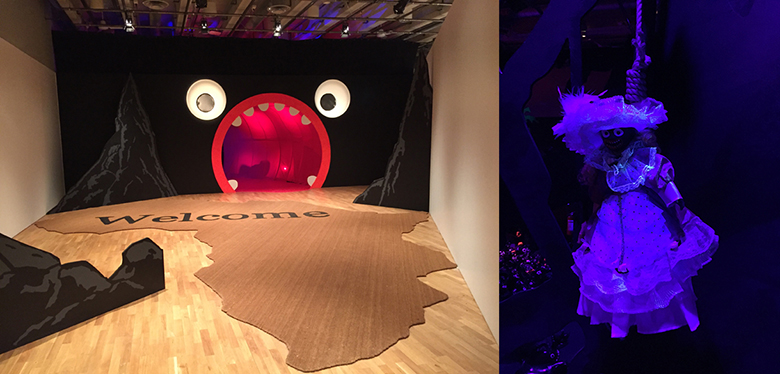
The Botkyrka Konsthall account of the exhibition describes specially designed tools that visitors could use together to uncover light or build dream worlds. It records research residencies in winter 2024 and autumn 2025, followed by an exhibition from November 2025 to February 2026. Those dates give the work a real seasonal setting. Visitors met its imagined darkness during Sweden’s actual dark months. The fiction did not float free of its place; it changed how that place might be felt.
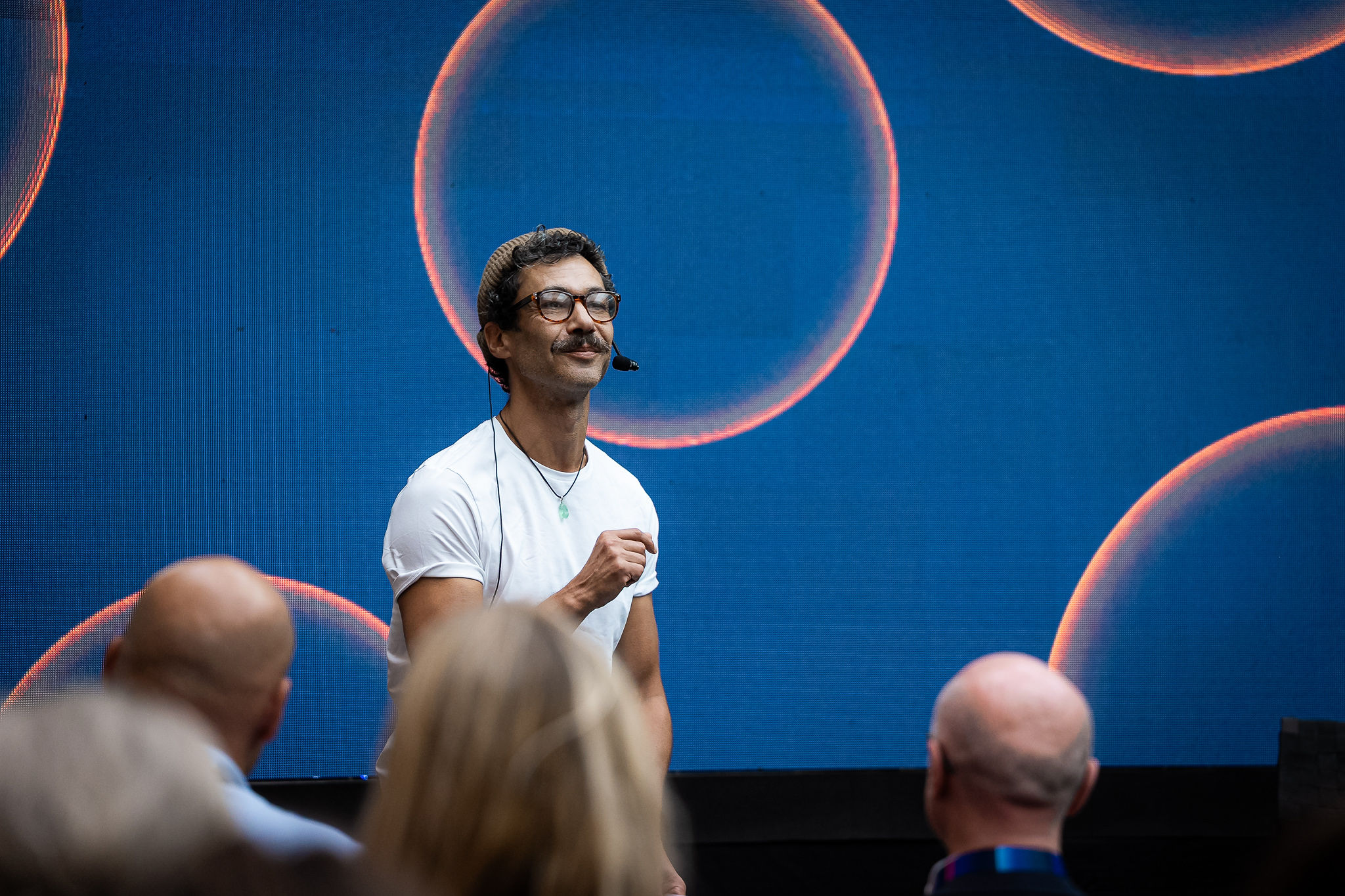
Adam and Amina are Swedish-Eritrean siblings whose practices meet without dissolving into one another. Adam works in choreography and performance at the boundary of art and technology, reinterpreting Swedish histories and mythologies through a queer Afrodiasporic perspective. Amina brings dreaming, oral traditions, ritual and fiction to an art of Black queer resistance and healing. Their joint proposal for Afro-Nordic mythology begins with a more provocative question than who may enter an old legend: who was given the authority to call it complete? The northern landscape has room for a story that changes when its tellers change.
Amina’s concern with dream and rest has its own path. Adam’s attention to instruments, systems and the politics of myth has another. Their collaborations become most alive where those paths cross. The sun beneath the earth is a proposition that needs bodies, sound, objects and other people to exist as more than a sentence. Its strange geology places a shared human task where the ordinary sunrise would have offered an automatic solution.
A sun that cannot be owned
Botkyrka’s exhibition text asks how people find one another in darkness and how closeness can be made collectively. The artists drew on bats’ echolocation, a way of navigating without ordinary sight, and on ilillta, an Eritrean vocal tradition in which the voice conveys more than words. Both references shift the work away from an individual looking for a light switch. Orientation is relational. A sound meets another surface and returns; a call reaches another person. The fictional earth holds light, but finding it depends on coordinated perception.
The invitation has two directions. Visitors may uncover light, or use the tools to build their own dream worlds. That second possibility keeps the exhibition from becoming a single allegory with one correct solution. Some people might follow the buried sun; others might take the task as permission to imagine another kind of place. Both depend on a shared rhythm. The artists therefore give visitors a structure without deciding every result. Their fictional world has a rule about light, but its social life is left open to the people who enter it.
The sun is ordinarily imagined as inexhaustible and beyond human control. In this fiction, it has to be recovered. A visitor cannot simply consume it from a distance. The designed tools and shared rhythm make access a matter of participation. The installation asks whether warmth can be a common achievement rather than a private possession. Its impossible premise sharpens an ordinary social fact: another person’s help can change how a difficult season is lived.
The Nordic winter can be used as a scenic cliché, a dark backdrop for a story of isolation. The siblings make it a site of encounter. Botkyrka’s account notes how shorter days can draw people indoors and apart. The exhibition counters that movement by opening a room for people to work together. Its title is lower-case and active: to excavate the sun. It names a task rather than a monument. The light is not presented as a gift from an institution or a solitary genius. It has to be made available through action.
Two residencies preceded the exhibition. The siblings could design the tools and the invitation, but each encounter would depend on the people who arrived and the choices they made together. That is a more demanding kind of authorship than simply placing an object in a room. The artists establish the terms of play, then allow visitors to alter its tempo. Cooperation is built into the form before anyone is asked to think of it as a theme.
An image of the exhibition can show the tools and the space in which they were used. It cannot reproduce the weight of a task undertaken with another person. A visitor using the tools would have a different relation to the work from a spectator looking at its record afterward. The gap between those positions is part of a participatory artwork’s form. Its materials include the choices made by people who enter it, and the small adjustments they make to one another as they work.
Braiding a home through a landscape
Earlier, the siblings made several attempts at braiding my way home, a work whose title refuses the promise of one successful route. The Ice Hot Nordic Dance catalogue credits both Adam and Amina as choreographers and Adam as the initiating performer. It identifies Amina’s contribution to costume and Malcolm Marquez’s hair costume, with music by Crystallmess and light by Jonatan Winbo. The programme describes a speculative Afro-Nordic landscape of braiding hair, fusing bones and growing fins, with dolphins and walruses offering images of heritage and navigation.
The animal references are not decorative oddities. The catalogue says Clymene dolphins defy conventional understandings of heritage and walruses trust their hair for navigation. In that company, braiding becomes more than a domestic gesture or a visual motif. It is a technique of relation, a way to bind strands without making them identical. The work asks what home might mean for someone whose history and body cross more than one inherited geography.
A Danish review in ISCENE describes an earlier presentation in which Adam braided a hanging expanse of hair, worked wax into their own hair and gradually moved from stillness into controlled dance. Crystallmess’s sound and Winbo’s changing light gave the action a surrounding world. The speculative premise was made through patient physical labour. A home did not arrive as a projected image. It was handled strand by strand.
The braid is unusually suited to this question. It requires time and touch. It can be undone and remade. It can carry beauty, technique, kinship and conflict without reducing any of them to a single symbol. In the performance, it is an action an audience can watch continue. The title’s plural attempts suggest that this labour may never reach one final destination. A person may make home repeatedly, in different places and among different people.
The work has toured beyond Sweden, but the Nordic landscape remains central to its terms. The catalogue calls it a collection of strategies for recovery and belonging in that landscape. The phrase is careful. It does not claim an authentic Nordic identity has finally been awarded. It proposes strategies that a person can practise while the question of belonging remains open.
Runes with another future
Adam’s separate work Dawn extends this reworking of Northern myth. A Sophiensaele production booklet describes it as the first performance in a series interpreting Norse mythology and the Elder Futhark runic alphabet through a queer Afro-Nordic lens. It begins from Dagaz, associated with day, dawn and awakening, and asks what happens to conventional oppositions between light and dark. The booklet also lists the collaborators in sound, light, costume, dramaturgy and production.
The figure of dawn links this solo project to to excavate the sun without making the works identical. In one, Adam examines inherited symbols and their moral assignments. In the other, the siblings invite visitors into a fictional task of recovering light together. Both refuse the idea that light is simply good and darkness simply bad. Such binaries can seem harmless in myth until they begin to organise ideas of purity, threat and belonging. Adam’s performance uses a rune as material for a new association rather than accepting every interpretation passed down with it.
In a Life Long Burning profile, Adam describes a related research interest in fictive archaeology and queer Afro-Nordic folklore. The artist considers time capsules: what people choose to leave behind and who has the authority to retrieve and interpret an object later. That question adds another temporal dimension to the siblings’ practice. A future is not only imagined ahead. It is shaped by what a present chooses to preserve, hide or mark as worthy of memory.
The same profile describes Adam’s interest in technology as part of choreography, including video installation and sensor-based instruments. These are not simply high-tech decorations attached to a mythological subject. They are tools with which a body can make, transmit and alter a world. A speculative folklore can use a coded instrument without claiming that technology has replaced embodied memory.
Adam’s 2026 work and from their hair, unending forest carried this investigation to another mythic figure. Kampnagel’s production account identifies Ymir, an intersex being whose body becomes the material of a world, and the rune Thurisaz, associated with giants cast as threatening outsiders. The work asked what happens when the category of the monstrous is reconsidered through a queer Black perspective. Its geography of body, death and transformation differs from the more communal invitation of to excavate the sun, but the two share a refusal to let an inherited myth dictate who belongs within it. The forest emerging from hair also returns a bodily material to a landscape too often imagined without Black lives.
Amina’s separate trajectory gives the collaboration its other pole. MDT’s artist page describes her work in sound, braiding, vibration, installation and performance, grounded in rest, dreams and ancestral knowledge. She builds fictional universes in which dreams can become seeds for future growth. This emphasis matters when reading to excavate the sun. The shared task is not a command to work without pause. It is a search for warmth, care and closeness, informed by an artist who treats rest as part of making a future.
Shared authorship is an artistic choice
The siblings’ joint work is not a convenient merger of two biographies. The credits of several attempts at braiding my way home and to excavate the sun show two artists choosing to build worlds together. The Ice Hot catalogue distinguishes their roles in the earlier work, while Botkyrka presents both as makers of the later exhibition. The differences between those structures are useful. One work centres a solo performer within a collaborative choreography; another invites the public into a shared environment. Collaboration changes form from project to project.
It also changes what counts as a Nordic story. The siblings’ proposal for Afro-Nordic mythology does not deny that old stories exist. It questions who has been permitted to inhabit them and who may revise them. A person with Eritrean and Swedish ties is not an intrusion into a northern landscape. The landscape has already been lived by people with many histories. Art can make that reality perceptible through fiction, not merely assert it in a statement.
The work’s Black queer perspective is especially important here. National myth often assumes a stable family line and a singular inheritance. Braiding, chosen relations, dream worlds and shared excavation all offer less rigid models. Home can be made through repeated acts; light can be found together; an old symbol can carry a new story. Those are artistic propositions with political force, but the force comes from how the works are built.
Krull’s story about the Audience Club and STHLM DANS asks how spectators find ways into unfamiliar dance. The Seid Tahirs’ projects offer two distinctive answers. The braiding performance lets an audience attend closely to a task unfolding over time. The Botkyrka exhibition gives visitors tools and a shared rhythm. In both cases, participation is more than understanding a programme note. It is a way of encountering an artwork through bodily attention.
The tools of to excavate the sun stay in the exhibition room. A visitor can leave with something less visible: the memory of waiting for another person's movement, listening for an answer and finding a rhythm that neither participant could set alone. Winter's daylight will return without anyone's help. Warmth between people asks for a different kind of attention. Adam and Amina give that attention a form one can practise.