A red car sits under streetlights, surrounded by people dressed in white. Their coats catch the light while the ground behind them disappears into darkness. One figure stands above the roof; others lean, sit or wait beside the doors. The image belongs to FutureBrownSpace, a project interested in what people can imagine and make together. A second version places the group against a field of stars. Its familiar car remains visible, while the setting asks the eye to travel elsewhere.
The people, clothes and camera made that shift possible. The pictures come from FutureBrownSpace, the artistic research project led by John-Paul Zaccarini. Its resident stylist, Camilla Wellton, made the costumes and photographed and edited these images. She also authored the I AWAKE universe, where books and embodied practice invite readers to take an active part in imagining a future. The pleasure of the pictures lies in their visible human effort. People dress, gather, pose and make an image of a possible world. It is an invitation to imagine with them.
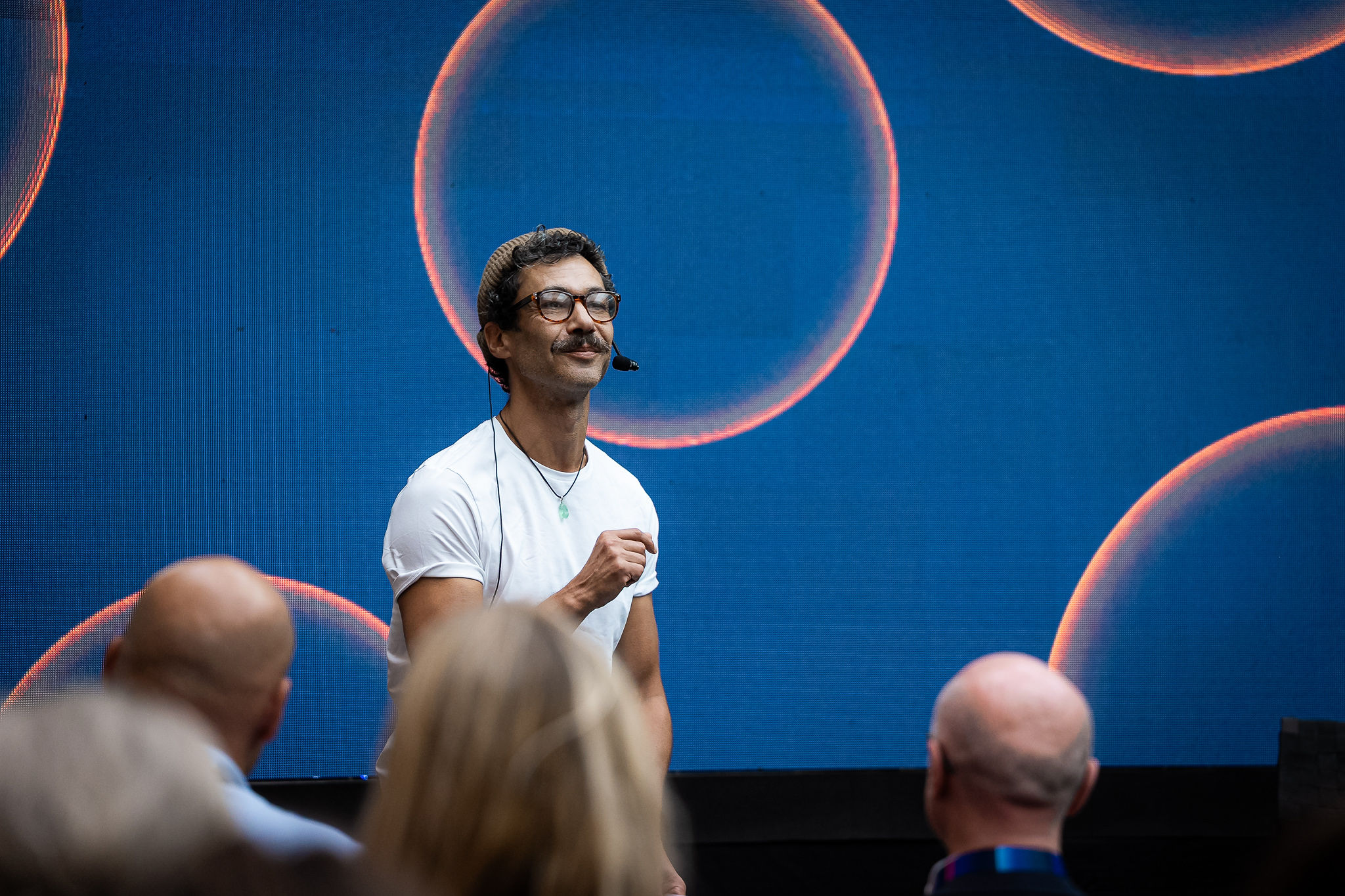
Zaccarini's AfroStar Galactica offers a different kind of journey. He frames the performance lecture as a flight aboard a Black Study research vessel, headed toward the Mothership. Its destination is an alternative timeline in the future, reached through an inward journey rather than a literal voyage through space. At CirkusMania in 2025, music, aerial movement, scent, speech and audience participation gave that idea a physical life. Zaccarini, a professor at Stockholm University of the Arts, calls himself a “Dragademic and Professor of Shade.” The title announces the blend of scholarship and play with which he welcomes his passengers.
What makes the imagined flight interesting is its crew. The festival names Zaccarini, musician and scent maker Toubab Holmes, aerial artist Lucie Maisha N’Duhirahe and Aurelia Day as makers and performers. Each works in a different register. Sound takes time to unfold. Scent travels beyond the stage. A body moving through air makes the usual direction of a lecture feel less certain. Their shared performance gives an audience several ways to enter a thought about the future.
The room before the journey
In 2020 and 2021 Zaccarini led FutureBlackSpace at Stockholm University of the Arts. The university describes workshops for artists of colour working within predominantly white institutions. Participants wrote, reflected and considered how care, resistance and the expectations placed upon them affected their art. The work made space for questions that artists might otherwise have had to carry alone.
This can sound simple until one thinks about the effort involved in constantly translating oneself for someone else. An artist may enter a studio with an idea about movement, colour or rhythm and find the conversation drawn back to an explanation of identity. FutureBlackSpace asked what might happen if the explanation were no longer the price of entry. Its workshops made time to think before a work had to present itself to a panel, an audience or an institution. The university brought together people whose practices could open different doors into that problem: psychologist Hanna Wallensteen, critical diversity consultant Anna Adeniji, photographer Andrea Kronlund-Davis, artist Holmes and fashion designer Wellton were among the named collaborators.
Zaccarini had been thinking about the gaze long before this performance. In an essay on the music video Brother, he describes making a queer of colour aesthetic space within a largely white university. The frame becomes a way of deciding who is centred and who is asked to explain themselves from its edge. A lens, a position onstage and the person who chooses the image all have a part in that decision. The concern is artistic as well as social: when the centre moves, a different image can become possible.
FutureBlackSpace offered a place to try such shifts with other people. Stockholm University of the Arts describes FutureBrownSpace as Afro-diasporic artistic research grounded in Black Studies, working through workshops, public seminars, performances, collaborations and publishing. Its concerns include minority stress, unconscious racism and the extra labour imposed on racialized artists in Swedish public and institutional life. Zaccarini's answer is artistic as well as pedagogical: make encounters in which experience can become knowledge and in which a group has time to invent its own terms of participation.
A performer with more than one voice
The ease with which Zaccarini moves between professor and performer has been earned across several kinds of stage. In a 2022 radio interview, he spoke about a mixed-race South African mother, a white Italian father and a working-class childhood in England. He also spoke from a career in acting, dance, circus, mime and scholarship. His history resists a tidy introduction. So does his work.
The solo show Mix Race MixTape used stand-up, hip-hop and spoken word to examine how a mixed-race life is named and read. In a 2023 interview, Zaccarini discussed the show's engagement with intersectionality. A joke can turn a room toward a difficult recognition before anyone realizes the turn has happened. A beat can hold an idea in the body after the words have passed. The variety of forms lets him refuse the demand for a single, consistent explanation of himself.
There is an intimacy to that refusal. The audience meets a person who can be funny, searching, learned and physically expressive within the same evening. He does not have to settle on the voice that an institution might find easiest to file. When Zaccarini later appears as a dragademic aboard The AfroStar Galactica, the comic title carries some of that earlier freedom. It makes a scholar's authority available for play rather than placing it behind glass.
Mix Race MixTape and The AfroStar Galactica are different works. The first centres a solo performer and the social pressures around his life. The second builds an explicitly Afrofuturist world with collaborators. The passage between them is less a change of subject than a change in how many people can hold the question. What is exhausting for one body to explain may become something a crew can study, sing, stage and remake together.
A flight whose instruments are people
In 2023, CirkusMania presented House of Future Brown as a work in progress. The festival called it an Afrofuturist fable of brown queer magic and named scent, song, circus and scenography among its materials. Zaccarini, Holmes and N’Duhirahe performed, with a wider group contributing consultancy, video and photography. Its mix of forms gives a sense of how widely Zaccarini's practice can move. The house is one work; the later AfroStar Galactica has its own framing and journey.
The 2025 programme calls The AfroStar Galactica an interactive performance lecture with an Afrofuturist destination. It credits Zaccarini, Holmes, N’Duhirahe and Day “by and with,” recognizing the performers as makers of its world. The project's own account casts the audience as passengers on a fully booked FutureBrown Airlines flight. The performers serve as cabin crew, guiding people into what Zaccarini calls inner space. The outward form is playful, but its instruments are Black Study, reflection and the collective imagination of those on board.
His website describes a vessel assembled with the spirit of making do: junk, tape and kitchen appliances enter its imagined construction. Rather than polished science fiction, this is a future made from available things and shared effort. Words such as Hope, Home and Future recur as coordinates. Passengers are invited to reflect and write as the flight proceeds. A person does not simply watch a finished vision pass in front of them; their memories, thoughts and wishes become part of the journey. The performance can include spoken word, song, theory, humour, scent, circus, food, dancing and a choir. Its exact form can change with the occasion, but the invitation to participate remains central.
Zaccarini is attentive to who feels entitled to imagine a future. On the FutureBrownSpace project page, the flight asks passengers to set down the habits of whiteness that can dominate a room and to orient themselves through Black and Brown thought. Humour makes that invitation possible without softening its purpose. The flight gives a difficult idea a sequence of actions: arrive, listen, notice, write, move, join. Its alternative timeline is made perceptible through those actions. The route goes through the people present.
Those questions do not dissolve in spectacle. The university identifies minority stress and unconscious racism in Swedish public and institutional life among FutureBrownSpace's concerns. Support from the Swedish Research Council and a university base make its work possible, while the work itself asks how an institution can allow a different centre of authority within its walls. The tension is alive onstage. Zaccarini can stand before an audience with the title professor and then rearrange the ceremony around music, circus and shared experience.
The people who make a world visible
Wellton's clothing gives the earlier FutureBrownSpace images a remarkable clarity. In the red-car photographs, white garments repeat across the group without turning the wearers into copies. The raised collars, draped lengths and layered volume link them as a crew; the way each person stands or sits preserves an individual presence. These are clothes made to be seen in relation to bodies and one another. On a dark street, they catch enough light to give the group its own visual weather.
Wellton was a collaborator in FutureBlackSpace and is named among the later FutureBrownSpace ground crew. She describes herself as resident stylist and says she created outfits for Zaccarini, Holmes and N’Duhirahe. Her testimony gives a maker's name to garments a viewer might otherwise remember only as part of an image. She photographed and edited the car pictures too, including the version that sets the figures against stars. The transformation from street to cosmos happens through a series of concrete choices: clothing, pose, camera, edit. It belongs to the people who made it.
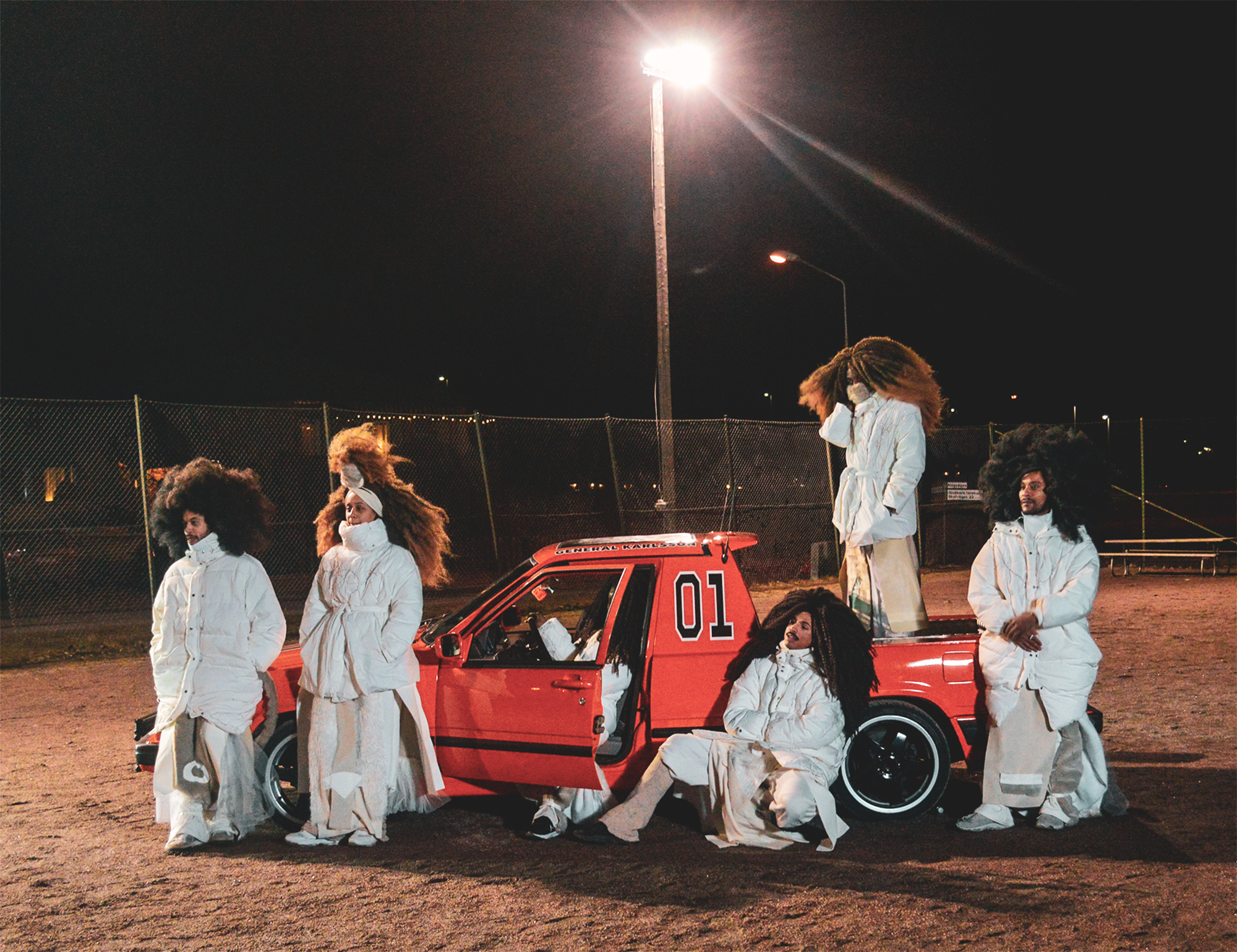
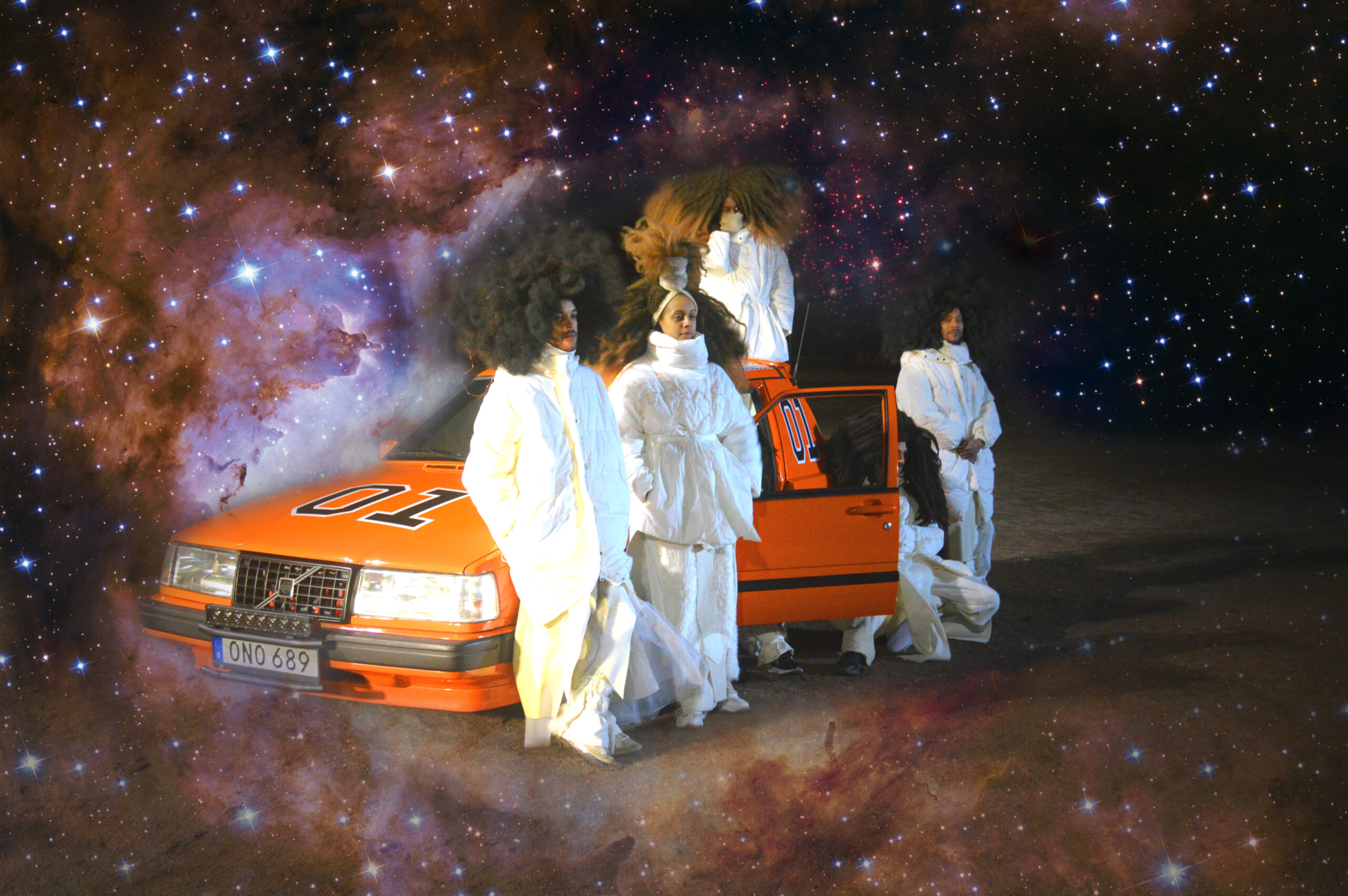
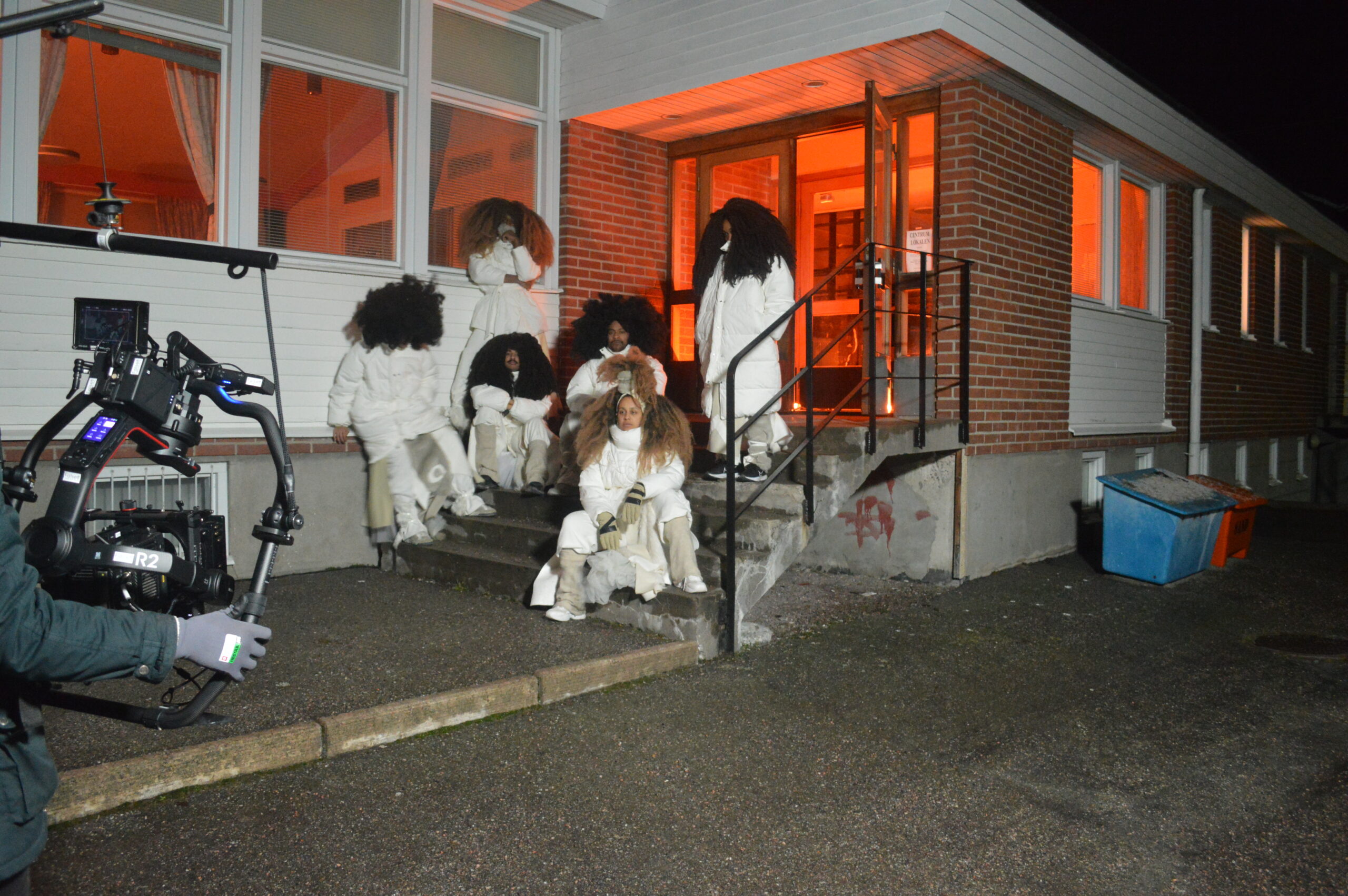
There is pleasure in the ordinary red car. The vehicle remains recognizable, down to its doors and bright bodywork. What changes is the company around it and the distance the image invites the eye to travel. One photograph holds the group under streetlights; another places their work against a galaxy. Both show imagination as something made with other people.
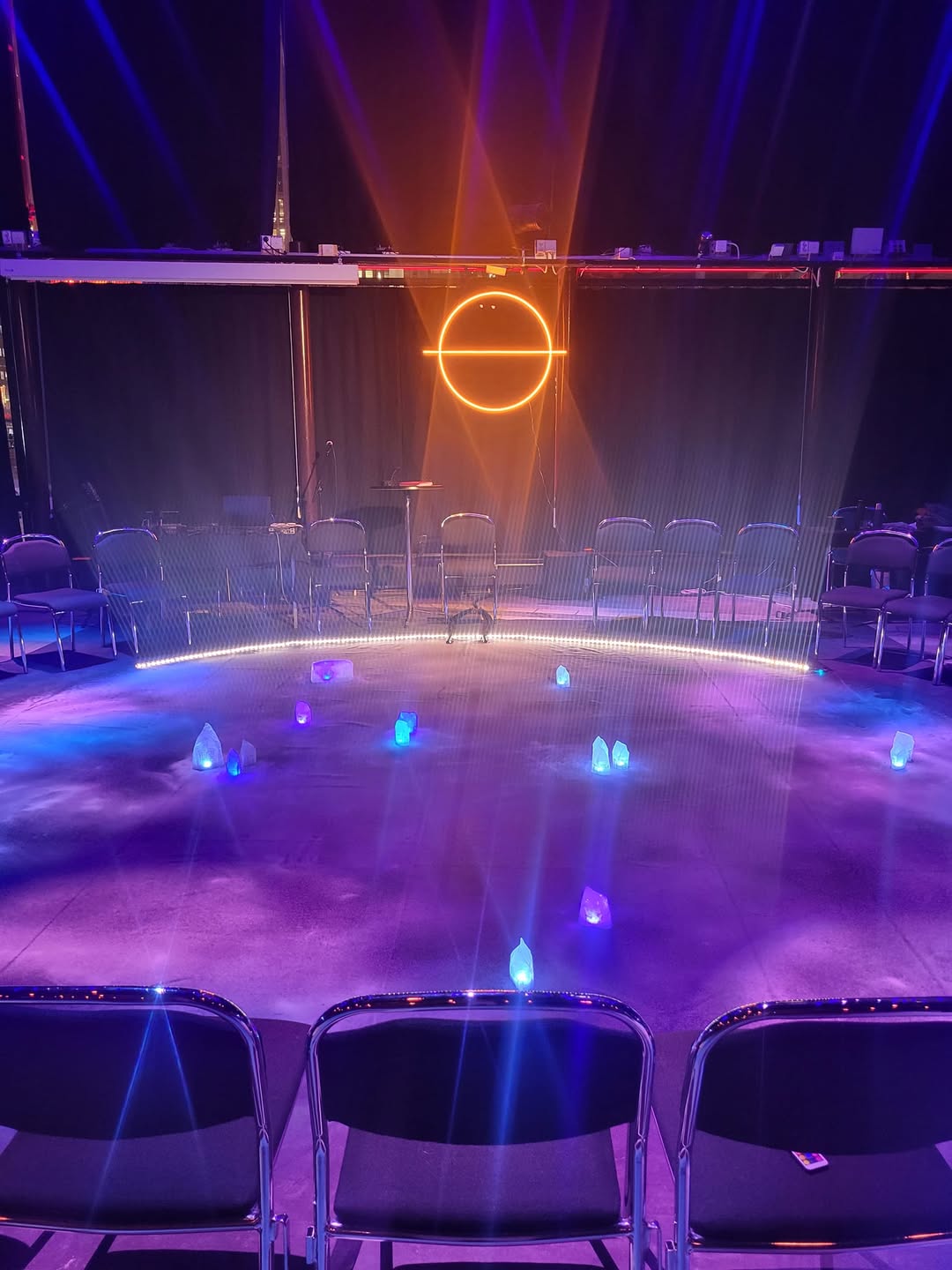
The stage of The AfroStar Galactica makes another version of that invitation. In a photograph taken by Zaccarini, chairs form a circle around a space lit blue and violet. Small points of light mark the floor, and an orange ring hangs above it. The room is empty, ready to receive people. Its scale is intimate enough to remember that the imagined flight begins with people sharing air and attention. No convincing spaceship set is needed to make its alternative timeline imaginable.
Holmes brings music and scent. N’Duhirahe brings aerial movement. Day is named among the makers and performers. Wellton's costumes help give several of those bodies a shared world. Zaccarini brings a lifetime of performance, teaching and study into the invitation. Each contribution changes what the others can do. A musical phrase can give a suspended body a new sense of time; a garment can turn movement into a line visible across the room; a scent can make the space itself feel present. The audience is asked to meet the work through more than one sense because its idea of a future has more than one author.
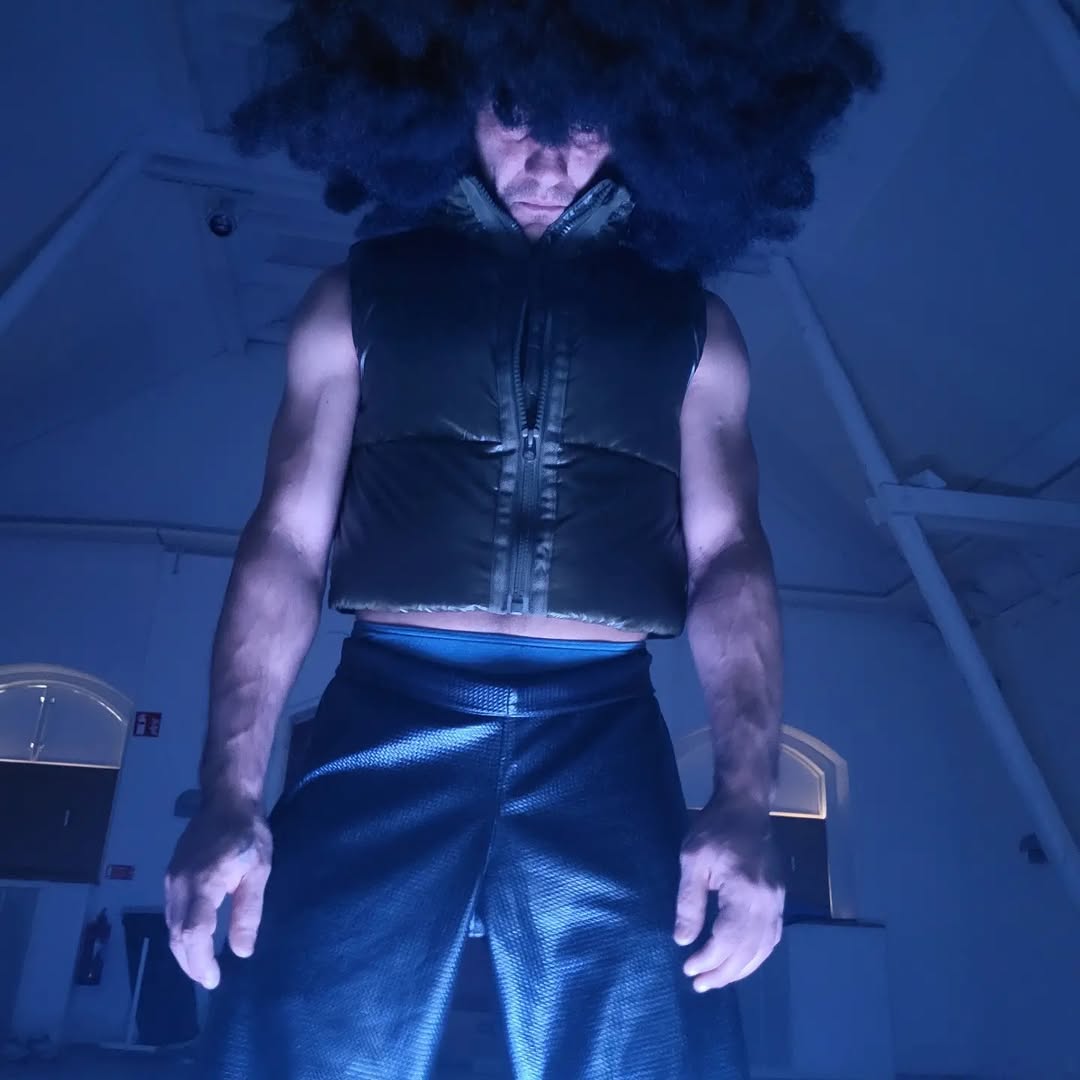
Zaccarini's own photographs offer glimpses of that imagination at different scales. In one, a set of bright pins bears words including Hope, Future, Home and Place of Justice. Held in the hand, those words become portable promises rather than a manifesto fixed on a wall. In another, he appears under blue light with a large dark afro. These pictures come from the same maker as the room with chairs, but their surfaces are different: an intimate handful of objects, a performed self, a space waiting for a public. The work makes room for all three.
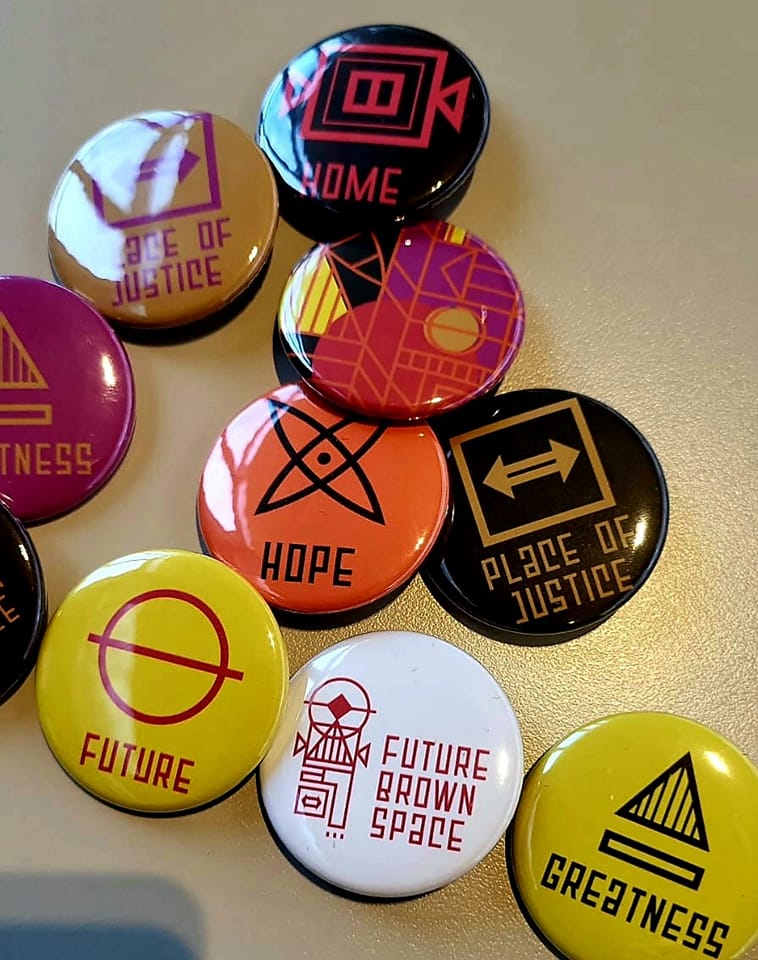
What comes aboard
FutureBrownSpace has never been confined to its shows. Its programme at Stockholm University of the Arts includes seminars and public work under the banner A Season of Black Study. Study here can take the form of writing, conversation or performance. It can be rigorous while allowing a voice to be funny or a body to move. On his project’s website, Zaccarini writes about Blackness, embodiment and voice, and about what changes when marginalized people shape the terms of an encounter. That aim lives in the flight’s hospitality. Passengers bring their own thoughts, then are given ways to make those thoughts audible and visible.
Stockholm is the project's working ground, but its imaginative and personal routes cross much wider territory. Zaccarini's family story reaches South Africa and Italy; his childhood and earlier performance life took place in England. The crew's practices draw on music, circus, costume and Black scholarship that cannot be contained by a national label. Krull's history of Nordic Afrofuturism in the 2020s places The AfroStar Galactica among works that have brought Black speculative futures into performance in this region. Its Nordic location gives the project particular institutions and audiences to address, while its conversation extends far beyond them.
The most affecting part of Zaccarini's voyage may be its hospitality. Here the imagined Mothership is approached through a room, a crew and an invitation to board. Its makers know that an audience brings the world with it: histories of who has been heard, who has had to explain themselves and who has been allowed to dream without permission. The performance offers another set of relations for the length of the flight. Its destination is a possible future; its method is the company assembled in the present.
Look back at the red car. The photograph has not left the street, yet the people around it have made an image capable of suggesting another horizon. Zaccarini's flight asks what might happen when the people looking at such an image are invited to help make the future it points toward.