The filmmaker and writer gives her characters difficult choices, then listens for what they might make possible together.
In Celia C. Peters’s Domesticated, Ephraim and Winsome have a way out. Aramintha has a plan to escape their collective captivity, but the two hesitate. The life they know is cruel; the life beyond it is unknown. That is a frightening distinction when trusting another person means giving up the small control you have learned to exercise inside a larger system.
Peters is drawn to the instant before someone takes that risk. “I’m interested in the moment when people get past their initial resistance to relying on someone else,” she says. There is nothing sentimental about the premise. Cooperation can fail. Aramintha may be wrong. But the familiar has already made its own demands, and Peters is too alert to human behavior to mistake endurance for consent.
Her work travels between screenwriting, fiction, visual art and live performance. Across those forms, she returns to people whose intelligence and imagination exceed the roles their world has prepared for them. The science fiction may be speculative; the social pressure is recognizably ours.
Two teenagers and a code
A code on a slip of paper gave one of Peters’s projects its name. In the late 1990s, a Times Square internet café printed RX15 on her login ticket. Later, at the Mid-Manhattan circulating library, she noticed two Black teenagers quietly at work. Their clothes struck her as hardcore punk with something almost couture about them. Peters, who had been a social worker, felt protective of the pair, then found herself thinking like a writer.
“But the longer I watched them, I knew I had to create characters of them. It just felt totally serendipitous.”
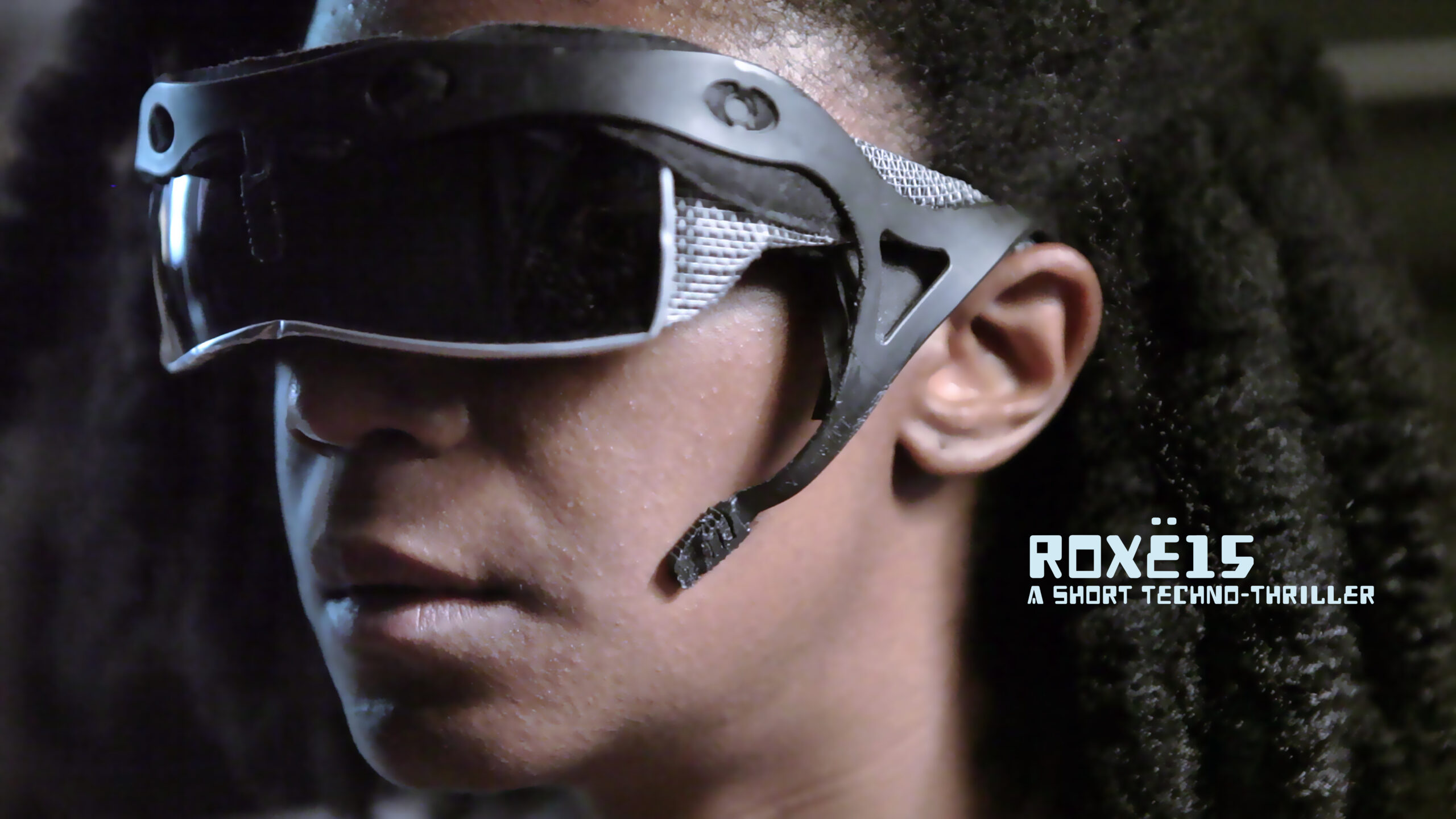
The result was Roxë15. Peters first wrote it as a feature script; she is now developing it as a limited series. Its young protagonists are Roxë Jones, a self-taught virtual-reality programmer who has left high school, and Denmark Turner, a graduate student working toward a doctorate in astrophysics. Their America is a future of severe inequality. Peters wanted a different story from the films in which Black young people try to escape adversity through crime only to end up dead or imprisoned. Here, they know science. Their minds can alter the terms of the plot.
That choice does not turn them into tidy symbols of brilliance. Roxë has watched her father, a doctor and humanitarian, killed on live television after he helped an injured child against police orders. Under stress, she whispers to herself. Peters calls it “a successful coping mechanism for her. Quirky, but coming from a real place.” The detail matters because Roxë’s ingenuity does not cancel what happened to her. A character can be extraordinarily capable and still need a way to get through the next minute.
Denmark’s name draws on Nat Turner and Denmark Vesey. Vesey planned an uprising that never took place. The reference carries a history of imagining freedom under conditions designed to make it impossible, and it gives the young astrophysicist a name with more than one horizon.
A woman returned to the cosmos
For The Blueprint, Peters began with an archival photograph of an unnamed African woman, taken in a former French colony on the Continent in the early twentieth century. Peters wondered what the woman might have thought when a colonizer made her image. The question cannot be answered by the photograph. What Peters could do was refuse to let its colonial setting be the last word.
She transformed the woman into the Lady Afronaut, with lightning in her eyes and the cosmos before her. The image also pays homage to Mitochondrial Eve, the matrilineal ancestor shared by all living people. Peters describes taking the woman “out of her original circumstances” and imagining her “far and free from the twisted and brutal chains of colonialism.” It is an act of artistic relocation with an ethical edge: the person in the old photograph had a life beyond what the photographer chose to record.
Peters’s imaginative company is wide. She names Octavia Butler as her favourite Afrofuturist writer and reads Ursula K. Le Guin, Margaret Atwood, Samuel R. Delany and William Gibson. When she is actively writing, though, she avoids science fiction; in her words, “osmosis is real.” Then there is Vangelis’s Blade Runner Blues, which she says sounds exactly like music an android would make if it had the blues. The line is funny, but it also catches her interest in invented beings with unignorable inner lives.
Her other projects range from Gaia First, an ecological thriller moving from story to short film script and now toward animation, to the novella ALLEVON. The form changes; Peters keeps making room for characters whose lives are larger than the circumstances that first introduce them.
Give the work a room
Peters also makes room for other writers to be heard. Her live reading series The Next 15 Minutes brings fifteen-minute excerpts of screenplays by underrepresented writers to life. Actors perform in character, sound design gives the pages a world, and the writers cast and direct their own pieces. After a hiatus, a May 2025 production in Oakland brought Peters together with four other writers and an audience whose response stayed with her.
Independent work can sometimes feel, she says, like “yelling to the wind.” A live room answers differently. Someone else hears the line; someone else lends it a voice. The script ceases to be a private argument with the page and becomes an encounter.
Domesticated asks whether people can trust one another enough to leave a familiar captivity. The Next 15 Minutes makes a smaller, immediate wager on that same capacity: let the writers lead, let the actors answer, let an audience arrive. The way out may begin with someone else saying yes.