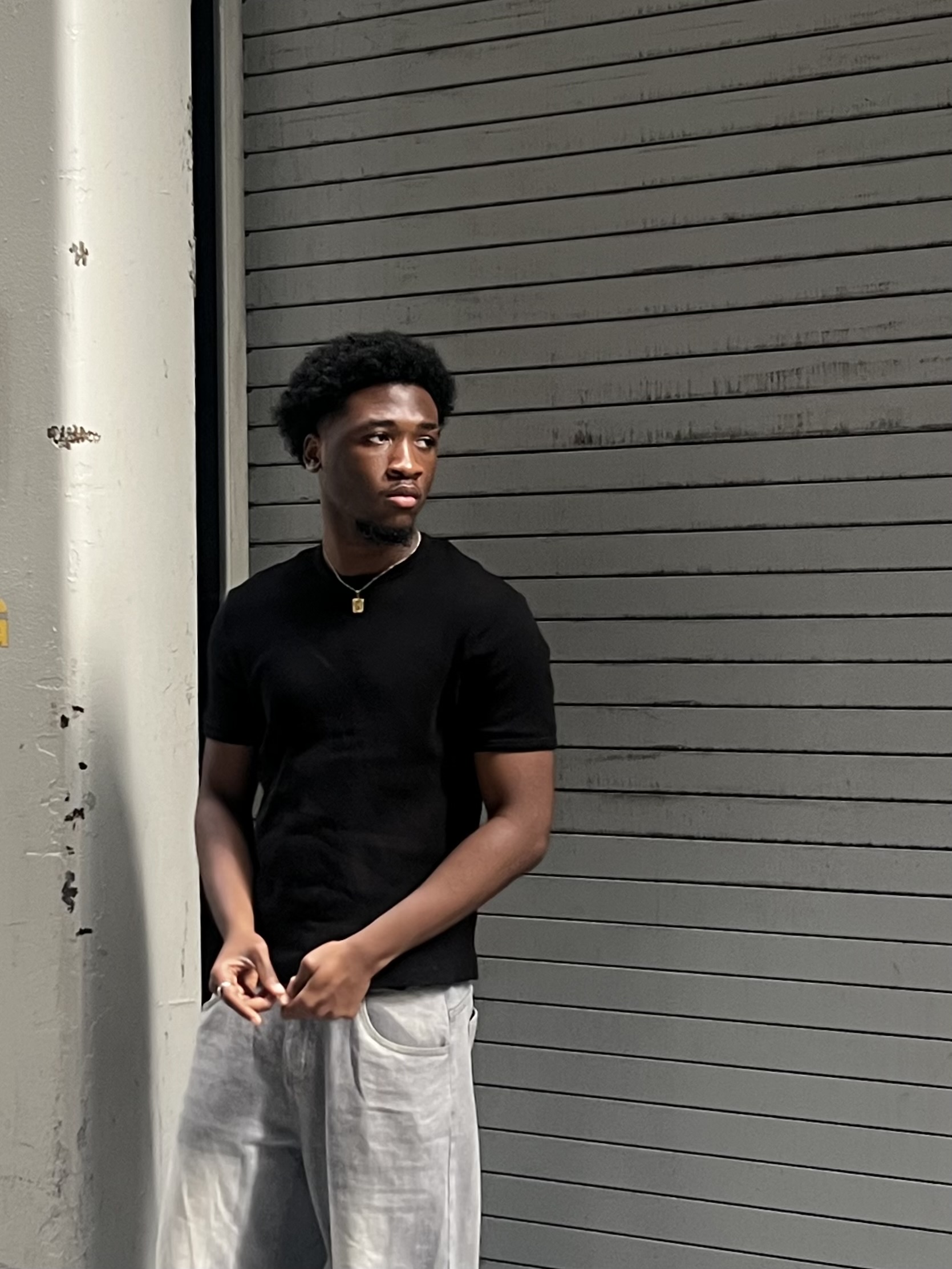
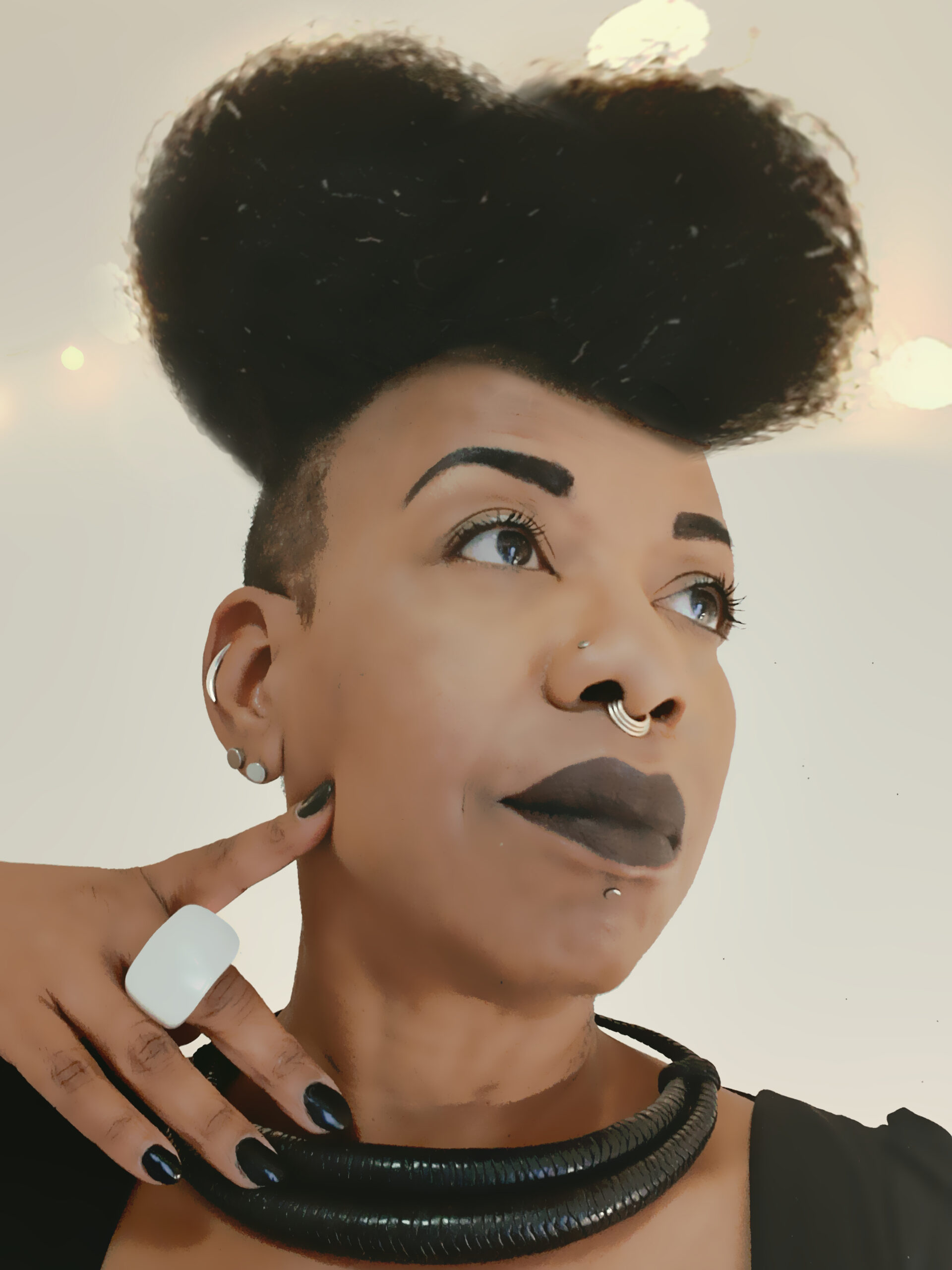
Vince Fraser on a woman dancing in Stockholm, the living histories behind his immersive worlds, and what an institution owes an artist after opening night.
A woman begins to dance. Motion sensors follow her movements, and the installation answers with images in real time. Watching her in Stockholm in 2024, Vince Fraser recognises something he had hoped his work could make possible: a visitor becoming a participant, finding her own way into a world he has built.
“She was completely immersed in it, almost playing with the artwork,” he recalls. Aṣẹ: Afro Frequencies, which brings his visuals together with Ursula Rucker’s poetry, had previously been shown in the United States. Stockholm was its first European presentation, he says, and he had wondered how an audience arriving with different cultural references would respond. The dancer offered one answer. She did not need to explain the work before entering into a relationship with it.
Fraser’s account gives the encounter a particular generosity. The images emerge from Black culture, African ancestry and the diaspora. Their specificity remains, even when a visitor does not recognise every reference. Feeling can begin a conversation that knowledge then deepens. “I want them to feel involved and become part of the experience,” he says.
A living culture inside another world
Ask Fraser how he understands his practice and he chooses Afro-surrealism. “The surreal already exists within the Black experience,” he says. Histories that may appear impossible or dreamlike from a distance can be ordinary, inherited realities for the people living with them. Spirituality, ancestral presence and daily life occupy the same field. His images give that coexistence a form.
The distinction matters for an artist readers may first encounter through Krull’s Encyclopedia of Afrofuturists. Fraser does not need to send a story into a distant future to loosen the limits of the visible world. He can begin with a living tradition, an encounter or a piece of history that has received too little attention. Technology enters as a means of making those relationships perceptible.
Ancestral Odyssey began with a visit to New Orleans and his interest in the city’s Black Masking Indians. Fraser describes the work at the New Orleans African American Museum as a permanent immersive installation. Monumental figures, elaborate beadwork, colour and surreal imagery bring ancestry and imagination into the same space. A mask can conceal one identity while revealing another. Its surface can carry a history that exceeds the individual wearing it.
Meeting Big Shaka Zulu, one of the tradition’s Big Chiefs, changed what Fraser understood about the culture he was depicting. Their encounter became a collaboration for the exhibition. Fraser’s recollection is brief, but its importance is clear: the work developed through a relationship with someone who could explain the historical significance of the masking culture. The digital world grew from listening to a person.
“I wanted people to feel as though they had stepped into another world,” Fraser says, “while recognising that it was rooted in a living culture and a real history.” That recognition gives the spectacle somewhere to return. Behind the monumental figure is a practice that people continue to make, teach and live.
An imagination that moves like an image
Fraser’s relationship with science fiction is less literary than a reader might expect. He does not read a great deal of it. Photography, film, animation and music more readily set an idea moving. His reading often takes him towards ancestral histories and overlooked stories of the African diaspora, which he then approaches through atmosphere, movement and sound.
“In many ways, my imagination works more like a moving image than a written story.” It is a useful description of how research becomes art in his practice. A historical reference can open a visual possibility without ceasing to belong to history. The transformation happens in how the viewer encounters it: at another scale, in another rhythm, surrounded by images rather than standing outside them.
When asked for a writer he would like readers to discover, Fraser names Ted Joans, whom he admires as an Afro-surrealist writer and artist. Poetry, visual art, jazz and Surrealism meet in the qualities Fraser values in Joans’s work. He is drawn to the freedom of moving between disciplines, and to the insistence on bringing Black identity and diasporic culture into Surrealism on one’s own terms.
Jazz offers another connection: an idea can develop through improvisation, taking a direction its maker could not fully predict at the beginning. Fraser hears that openness in Joans and recognises something he wants for his own practice. Surrealism becomes a way of experiencing the world as well as a way of making an image.
A story beneath the Caribbean Sea
Fraser does not write science fiction himself. If he were to write a script, though, he knows which of his visual worlds he would enter: Duppies of the Deep.
In his description of the series, the Marassa Duppies are spectral ancestral beings born from the souls of those who died during the Middle Passage. They exist beneath the Caribbean Sea, carrying memories of loss, sorrow and resistance. The ocean holds hidden stories, and his imagined beings guard them.
For now, the script is a possibility he would like to explore. A world can already have emotional force before its maker decides whether it needs dialogue, a screen or a written page. His answer suggests that the images have given him characters and a place; a script would offer another way to spend time with them.
After the opening night
Immersive work also depends on less visible arrangements: time, budgets, communication and people who know how to keep the technology working. Asked what makes a museum or gallery partnership feel right, Fraser begins with trust and a shared understanding of the project. He wants to know why an institution has invited him specifically, and how his practice connects with its programme and audience.
Creative freedom needs practical support. Digital art, animation, sound and immersive technology do not always develop along a predictable route. Realistic schedules and adequate technical resources give experimentation somewhere to happen. Fair budgets recognise the work required to turn an imagined encounter into something a visitor can experience.
Fraser also asks institutions to think beyond the opening. Maintenance, documentation and preservation belong to the partnership. The dancer in Stockholm could meet an image that answered her because a system was working in the room. Keeping such an encounter available requires care after the first photographs have been taken and the first guests have left.
An invitation on the way home
For a future encounter in Stockholm, Fraser imagines a familiar public place opening into another world. Monumental ancestral figures might move across buildings through colour, light and sound. Someone on an ordinary route through the city could stop without having planned to visit an exhibition.
He would want the visual invitation to lead towards curiosity about African and Caribbean cultural traditions. The encounter might leave a feeling, a question or a changed perspective on ancestry. Its life would continue in what the passer-by carried away.
His invitation to readers begins on a smaller scale. Listen to music, visit a gallery, spend time in nature, notice what an ordinary day puts in front of you. Follow an idea without requiring it to declare its destination immediately. “Don’t wait for someone to give you permission or tell you what you should be creating,” he says.
That advice returns us to the woman dancing. She found a possibility in the work and moved towards it. Fraser watched the images respond, and recognised the kind of encounter he wanted to make.
Interview by Camilla Wellton. Based on Vince Fraser’s written responses to Krull, November 2026.