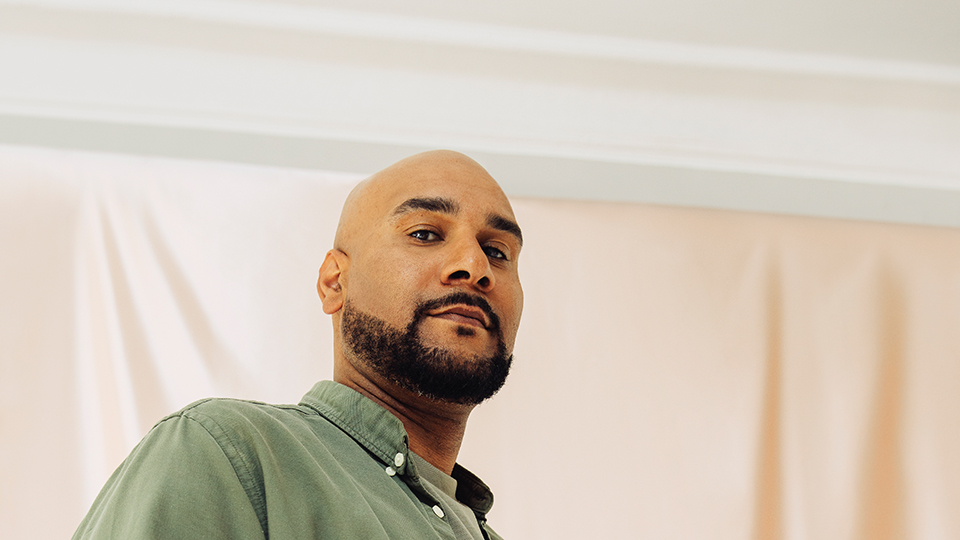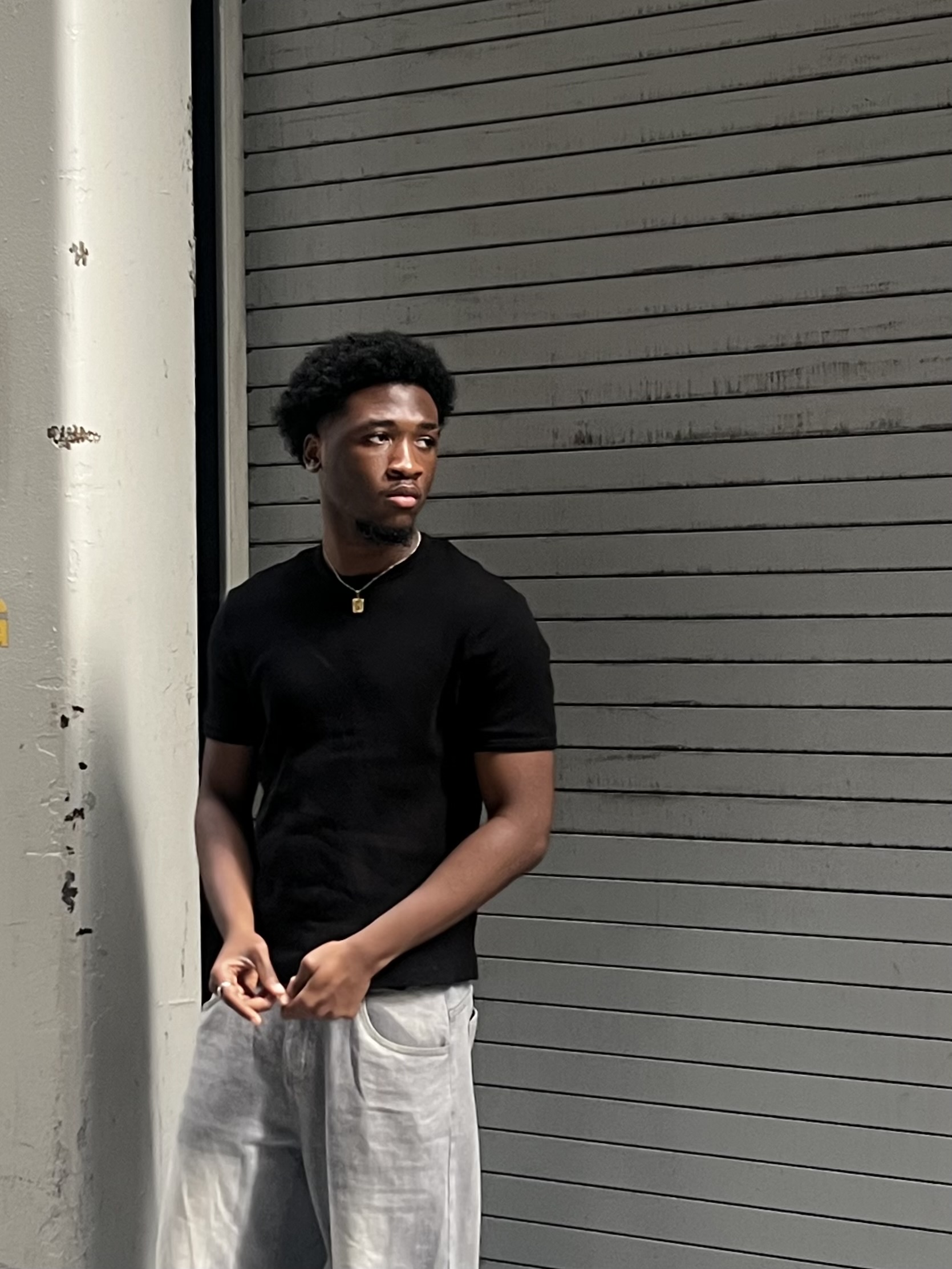
Nana Kwadwo imagines futures with cowrie-shaped jackets and clothes bold enough to act as a superpower. His idea of a good ordinary Tuesday begins somewhere quieter: a shower, breakfast, and the freedom to leave the house without calculating how to get water first.
“Waking up, taking a shower, grabbing food and heading out shouldn’t be a luxury,” he told Krull. Growing up in Ghana, carrying yellow gallons to fetch water was a regular part of life. The errand could become so familiar that its claim on a person’s time went unnoticed. His future has room for dancing and friends and choosing a favourite outfit. “Nothing too crazy or futuristic. Sometimes the biggest flex is being able to live freely without having to fight for the basics.”
During a creative block, Kwadwo noticed a yellow jerry can behind his family’s house. It was used to store water. He had seen containers like it all his life, but this one made him pause. It became the starting point for A City Running Dry, a work about galamsey, illegal mining, and the pollution of water bodies in Ghana. The image was featured on Google Arts & Culture.
“Once I started making the piece, it surprised me how easily that object was expanding into a whole new idea,” he said. He took a lesson from the encounter: “the next idea is usually already in the room.” A water can became a way to picture a public crisis without losing sight of a family home.
One portrait he imagines places him on a football, earphones in, African kente stitched into baggy jeans. Accra, the diaspora and the game meet in the outfit. He wants it to show “a future where our culture is the foundation rather than a footnote.”
“Clothing and fashion are probably my favourite ways to tell stories in my art.” His Freedom Stop tee draws on Ghana’s Independence Arch and Black Star of Freedom. He sourced fabric, spoke with manufacturers and joined the printing process. He remembers making it as “such a fire experience.”
Elsewhere, a pair of boots can do the character work. In See No Evil, he dressed a figure in Timberlands and baggy “sworts,” his word for sweatpant shorts. Viewers noticed the boots and began telling him their own stories about them. In Cowrie Culture II, a cowrie-shaped jacket appears with matching boots and a skirt. Kwadwo hopes to make the jacket for real. When a garment is this persuasive on paper, you begin to wonder where it would go first if it could step out of the frame.
An image series inspired by Instagram’s Rings Creator Award gave him another way to make everyday forms speak. Rings became earrings and bicycle tyres. They also marked the repeated work of creating: trying, failing, succeeding and beginning again. The figure stood for Kwadwo and other creators, with the circles carrying more than one meaning at once.
Try looking at the ordinary things around you with Kwadwo’s eye for possibility. Take a photograph of a bag pattern, a shadow, or the way wind folds a piece of fabric. Then ask how you might “swag this up.” A bicycle wheel might become a button on a double-breasted suit. “You don’t always need a crazy idea to start with. Sometimes you just need to look at what’s already there a little differently.”
His imagined worlds have an unruly guest list. Divergent is his favourite book and film; he likes that Tris and Four challenge a system by being different. “That idea of not fitting into what society expects of you has always stuck with me,” he said. “I always say I’m divergent haha.” He also grew up with The 100 and The Flash. Samsung’s Galaxy 11 film, in which footballers are chosen to save the world from aliens, was “peak.” It put the sport somewhere even the most ambitious stadium could not reach.
Kwadwo’s route into Afrofuturist fiction leads to Nnedi Okorafor’s Binti. “I’d start with Nnedi Okorafor, she’s the GOAT!” He loves the journey to a university in space and the density of a world he can picture down to “the characters, the environments, even the smallest details.” He wants to step inside it.
A character from his artwork Swag as Rebellion gives that love of difference a body. A Greek mythology class set him thinking about wings as symbols of freedom. For him, flight could stand for the confidence to be yourself in a world that asks you to fit in. In the world he imagines, “style is its own kind of superpower.” Dressing, moving and carrying yourself become forms of rebellion.
Music is there while he works. Black Sherif, Rema or Jorja Smith may push a pose or a colour. Olivia Dean or Naïka may slow him down enough to notice a smaller detail. The finished image has “a soundtrack that only I can hear,” he said, though he suspects viewers hear something of it too.
Look again at the kente stitched into the jeans, the boots that start a conversation, the cowrie jacket that might yet become a real garment. Then return to the yellow can behind the house. Kwadwo’s futures can be exuberant, strange and beautifully dressed. They can also be as plain as turning on a tap, taking a shower, and walking out into a day that belongs to you.